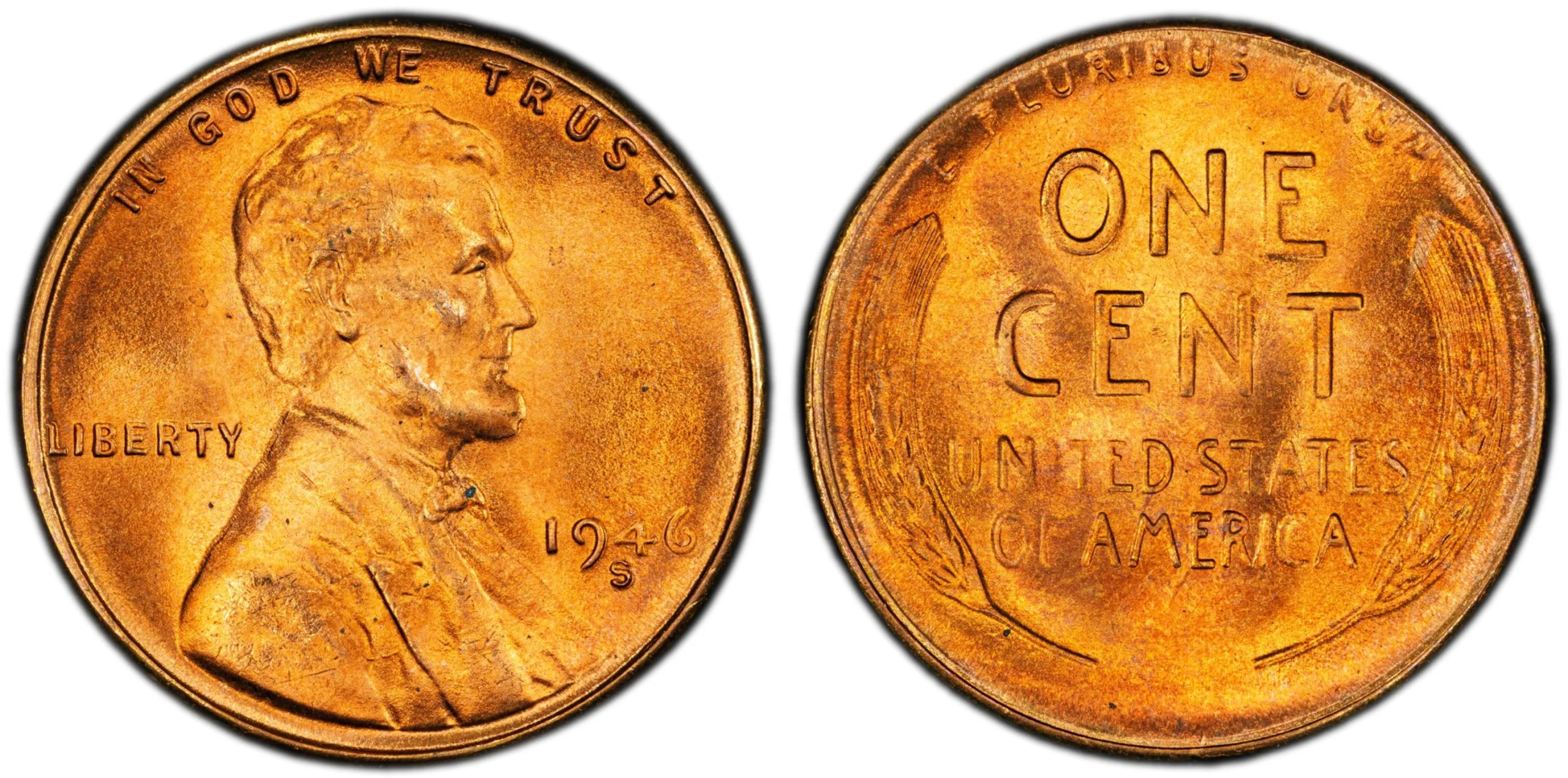
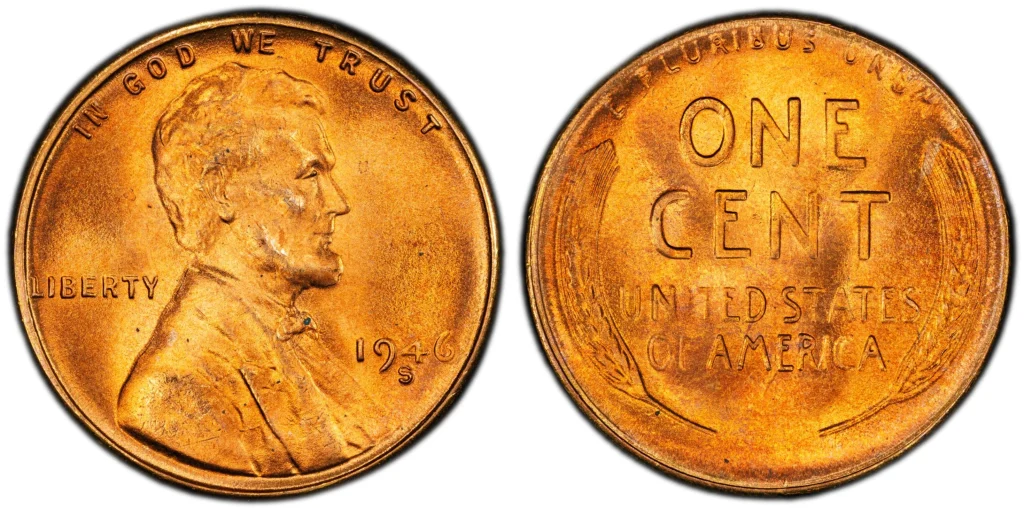
The 1946 Wheat penny value reaches $1,700 at auction, but not all pieces are worth more than $1,500. Some of them have only face value.
How Much Is a 1946 Wheat Penny Worth Today?
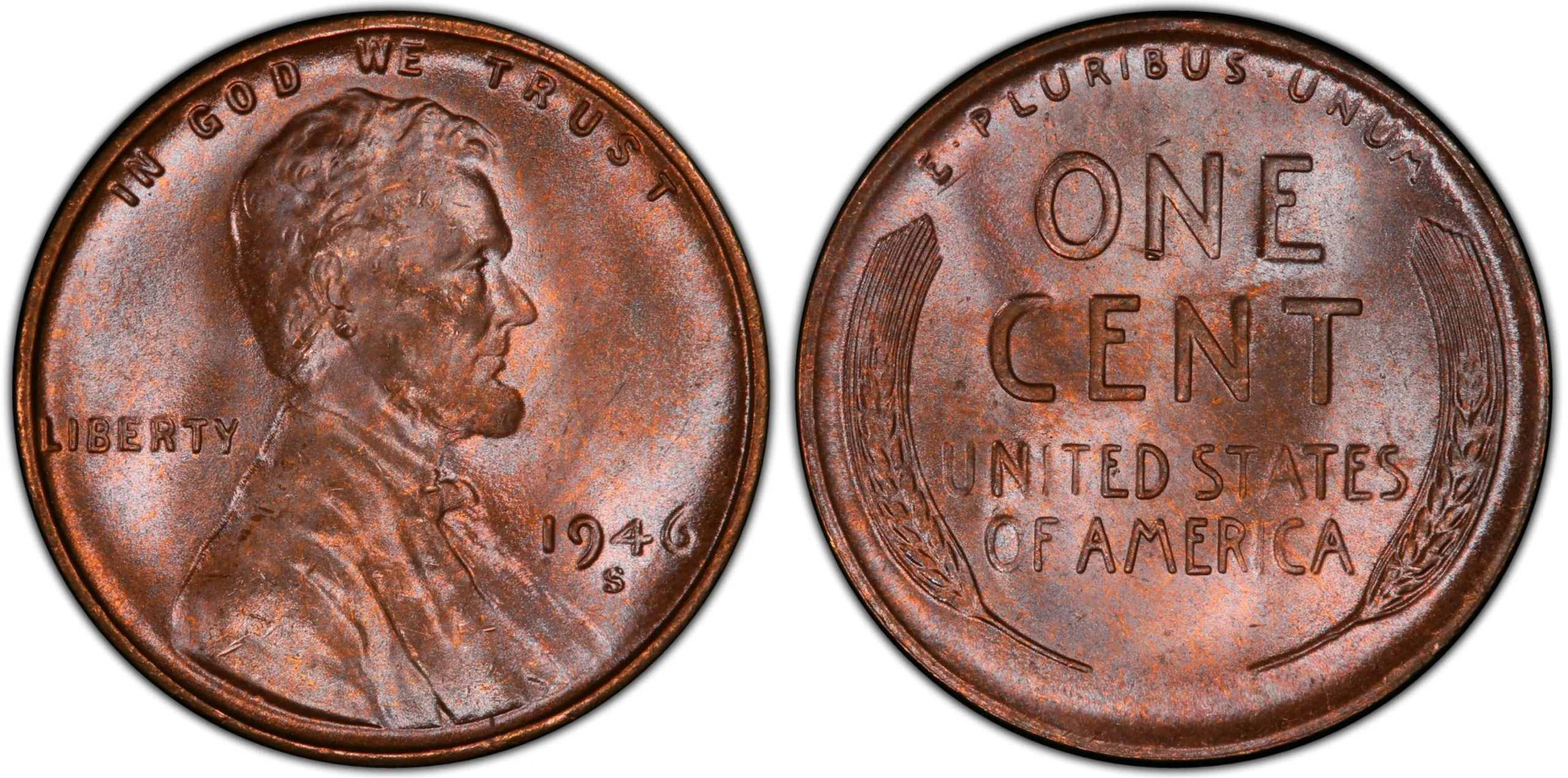
Circulated item price starts from 2 cents – these coins are heavily worn, chocolate brown, and lack original mint luster. Because billions survive, their value is driven mostly by their copper bullion weight rather than numismatic rarity.
The 1.5 Billion Mintage Paradox: Massive Supply & Rare Conditions
Numismatists encounter a striking statistical contradiction when they study the 1946 penny. Across all three active mint facilities, total production neared 1.5 billion individual coins.
This colossal supply means that billions of these pennies entered the mainstream economy immediately, where decades of daily commerce wore down their sharp design lines.
While a basic, worn 1946 penny remains easy to find for a few cents, high-grade examples that look exactly like they did on the day of production are incredibly scarce. The high mintage numbers conceal a very low survival rate for flawless coins.
What Drives the Modern 1946 Penny Market?
Two core elements dictate the cash value of a 1946 penny today:
- Its physical condition
- Its specific color designation
Serious collectors participate in registry set competitions where they vie for the highest-graded known specimens.
This specific type of demand creates an aggressive bidding climate for elite coins. A difference of just one point on a grading scale can cause a coin’s price to jump from twenty dollars to several thousand dollars at auction.
Item Overview
| Year | 1946 |
| Weight | 3.11 g |
| Diameter | 19.00 mm |
| Edge | Plain |
| Metal | 95 % Copper |
1946 Wheat Penny by Mint Mark
There are three mints for the issues:
- Denver
- San Francisco
- Philadelphia
1946 Philadelphia Wheat Penny
Mintage – 991,655,000 pieces
Common uncirculated pieces in grades like MS-63 or MS-64 retail for one to five dollars. Large commercial dealer inventories prevent these lower-tier examples from gaining any serious price momentum.
1946 Denver Wheat Penny
Mintage – 315,690,000 pieces
Denver generally maintained its coin dies better than Philadelphia, which resulted in a slightly higher survival rate for well-struck pieces. Finding a certified issue at or above the MS-67 Red tier remains a major challenge for modern buyers.
1946 San Francisco Wheat Penny
Mintage – 991,655,000 pieces
Because of this smaller mintage, collectors target the S cent with extra scrutiny. San Francisco operated its machinery past the point of normal die wear, which makes sharp, crisp strikes highly unusual for this specific issue.
1946 Wheat Penny Errors Worth Massive Money
The 1946-S/D Overmintmark Variety
Die varieties offer an exciting path to high market values. The most famous variety for this year is the 1946-S/D Overmintmark, listed in the Cherrypickers’ Guide as FS-511.
This error occurred when a mint workman punched an S mark directly over an underlying D mark. Collectors can verify this variety under magnification by looking for the distinct vertical bar and curves of the hidden D inside the loops of the S.
Auction Value $600–$1,700
The 1946 S Inverted Mint Mark Variety
Another highly sought-after San Francisco variety is the FS-501 Inverted Mint Mark error. In this case, a worker accidentally punched the S into the die upside down before noticing the mistake and correcting it. This leaves faint, duplicated metal lines around the mint mark.
Auction Value $350–$800+
Common Planchet Errors: Lamination Flakes and Wrinkled Blanks
The recycled wartime shell-case alloy suffered from poor metal consistency. As a result, the 1946 series shows many planchet errors. Lamination errors occur when the metal peels or flakes off the coin’s surface.
Wrinkled or clipped blanks also pop up occasionally. While these minor errors do not command thousands of dollars, they consistently bring twenty to fifty dollars from error specialists.
Auction Value $50–$100+
1946 Item Prices
| Grade | Color | Market Value |
| Circulated | Brown | $0.05–$0.50 |
| MS-63/MS-65 | Red-Brown | $1.00–$25.00 |
| MS-67 | Red | $1,000–$3,000+ |
| MS-67+ | Red | $3,000–$16,800+ |
Top Online Platforms for Buying 1946 Penny
When buying a 1946 Lincoln Wheat Penny, if you target high-grade certified pieces or rare varieties like the 1946-S/D – you must choose platforms that offer robust buyer protections or specialized numismatic auctions.
1. GreatCollections Coin Auctions
GreatCollections is a premier online auction house that deals exclusively in third-party certified coins:
- PCGS
- NGC
- ANACS
You never risk buying a counterfeit or a cleaned, raw coin here. Because every listing features certified inventory, it is the safest marketplace to hunt for high-grade 1946 Red cents or verified varieties.
Best for registry-set collectors and alternative asset investors tracking certified condition rarities.
2. Heritage Auctions
Heritage Auctions is the largest numismatic auction house in the world. They handle elite, museum-quality pieces and hold the world records for the highest-priced 1946 pennies ever sold.
Their archives give you access to decades of historical pricing data, high-resolution zoom photography, and expert catalog notes. They run weekly online coin auctions alongside major signature events.
Best for finding top-population masterpieces (like MS67 or MS67+ Red specimens) and rare major errors.
3. eBay
eBay hosts the largest volume of Lincoln Wheat pennies on the internet. However, the open nature of the platform requires extra caution.
Unmatched volume and selection. To navigate safely, you must use the search sidebar filters to select Grading Corporation: PCGS or NGC. This filter instantly removes risky unsearched estate rolls or raw, overgraded coins.
Best for finding mid-tier uncirculated pieces and common circulated 1946 repository fillers at competitive market rates.
4. David Lawrence Rare Coins
DLRC operates a highly active online retail store and weekly internet auctions. They specialize heavily in certified U.S. coinage and cater directly to registry collectors.
They offer a clear system on retail inventory and maintain a strict standard. They also feature a high concentration of CAC-verified coins.
Best for collectors who prefer direct retail purchases over competitive live auction environments.