Ordinary quarters have a very basic 1999 quarter value of $0.25. Nice collectors quarters in MS65 condition sell online for prices between $1 and $5.
Rare error quarters in perfect MS68 condition reach amazing prices from $500 to $3,000.
| Feature | Copper nickel coin | Silver coin |
| Face value | $0.25 | $0.25 |
| Coin weight | 5.67 grams | 6.25 grams |
| Metal mix | 91.67% copper and 8.33% nickel | 90% silver and 10% copper |
| Coin edge | Reeded | Reeded |
| Mint mark | P, D, S | S |
Silver metal price changes affect the minimum coin value directly. Higher market silver prices raise the raw coin value immediately.
Silver price trends show stable growth over the last few years:
2024 silver quarter price: $4.50
2025 silver quarter price: $5.10
2026 silver quarter price: $6.20
Value by Grade and State
| State and Mint Mark | MS63 Price | MS65 Price | MS67 Price | MS68 Price | Record Price |
| Delaware P | $1 | $3 | $15 | $75 | $4,880 |
| Delaware D | $1 | $3 | $12 | $65 | $3,220 |
| Delaware S Silver | $8 | $15 | $35 | $90 | $720 |
| Pennsylvania P | $1 | $2 | $10 | $55 | $1,150 |
| Pennsylvania D | $1 | $2 | $8 | $50 | $1,020 |
| Pennsylvania S Silver | $7 | $14 | $30 | $85 | $690 |
| New Jersey P | $1 | $3 | $14 | $70 | $1,610 |
| New Jersey D | $1 | $3 | $10 | $60 | $1,430 |
| New Jersey S Silver | $8 | $16 | $32 | $95 | $810 |
| Georgia P | $1 | $2 | $12 | $65 | $3,450 |
| Georgia D | $1 | $2 | $10 | $55 | $2,800 |
| Georgia S Silver | $7 | $15 | $28 | $90 | $650 |
| Connecticut P | $1 | $4 | $18 | $95 | $1,200 |
| Connecticut D | $1 | $3 | $15 | $80 | $1,100 |
| Connecticut S Silver | $9 | $18 | $40 | $110 | $950 |
Record auction sales happen when rich buyers bid on top grade specimens. Normal pocket change quarters rarely have this extreme value.
How to Grade Your Quarter
Coin grading determines the final cash worth. Expert graders use the seventy-point Sheldon scale to evaluate coins. You can examine your quarters using simple grading rules.
Proof
Proof coins show a perfect mirror surface with frosty frosted details. Special mint machines made these items for collectors. You will not find any hairline scratches on these specimens.
Coin sets sold by the mint contain these high quality pieces. Mirror fields reflect light beautifully. Mint employees handled these coins with extreme care during production.
Mint State 67
MS67 coins have a very strong original luster without visible bag marks. Only a few microscopic contact spots exist on the metal surface. Washington portrait details look perfect with coin-identifier.com.
Severe marks do not disrupt the clean fields.
Buyers pay high premiums for these gorgeous coins.
Mint State 65
MS65 quarters show full original shine on both sides. Tiny hairline scratches appear on the large design elements. Wear signs do not exist on the coin.
Most collectors start their state quarter collections with MS65 grades. These items offer a great balance between nice appearance and affordable cost. You can buy these quarters easily at coin shows.
Mint State 63
MS63 coins have slightly dull or uneven luster. Several noticeable contact marks cover the coin fields. General coin eye appeal remains good for average collections.
This grade usually represents coins saved from original mint bags. Small copper spots might show on the nickel surface. Price levels stay very low for MS63 specimens.
About Uncirculated
AU coins show the first signs of wear on the highest design parts. Washington hair lines above the ear lose some fine details. Less than half of the coin surface has original luster.
Circulation friction starts rubbing the metal peaks. You can spot this light wear by tilting the coin under a bright lamp. Auction buyers pay very low prices for these pieces.
Extremely Fine
XF quarters keep most design details except for minor decorative parts. Heavy circulation wear appears clearly on both sides of the coin. Original mint luster remains only around the legend letters.
Coin fields lose their smooth look completely. These coins spent several months or years in pocket change. Most people use them for simple coin albums.
State Designs
Every state design has unique coin features. These pictures made the series highly popular.
Delaware
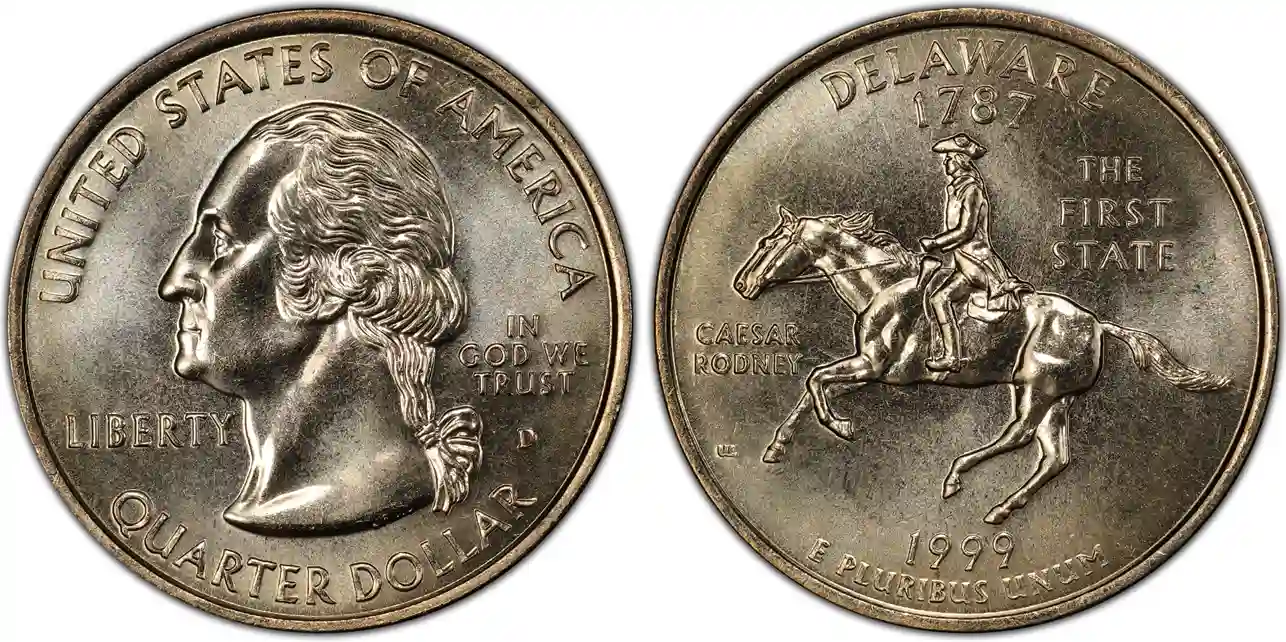
Delaware quarters show historic rider Caesar Rodney on his fast horse. Artist William Cousins created the reverse design using old historical paintings. Philadelphia quarters from Delaware have slightly higher prices than Denver coins.
Many people collect this specific design because it represents the first state in the Union. Perfect specimens in MS68 grade sell for high prices.
Pennsylvania
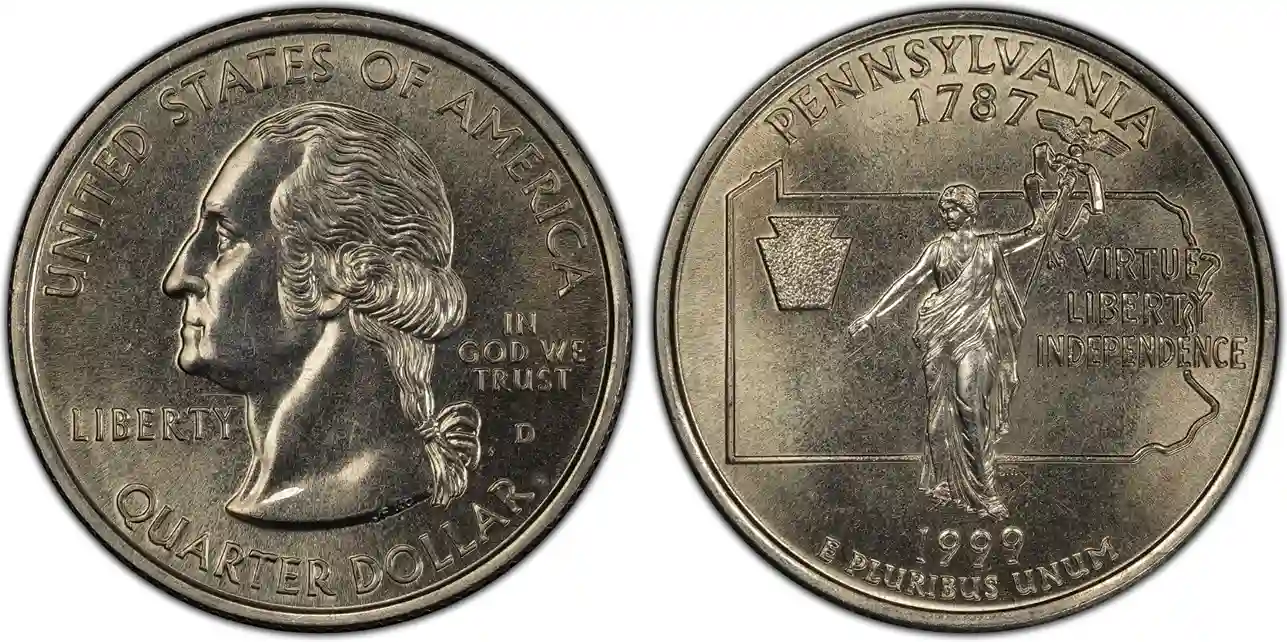
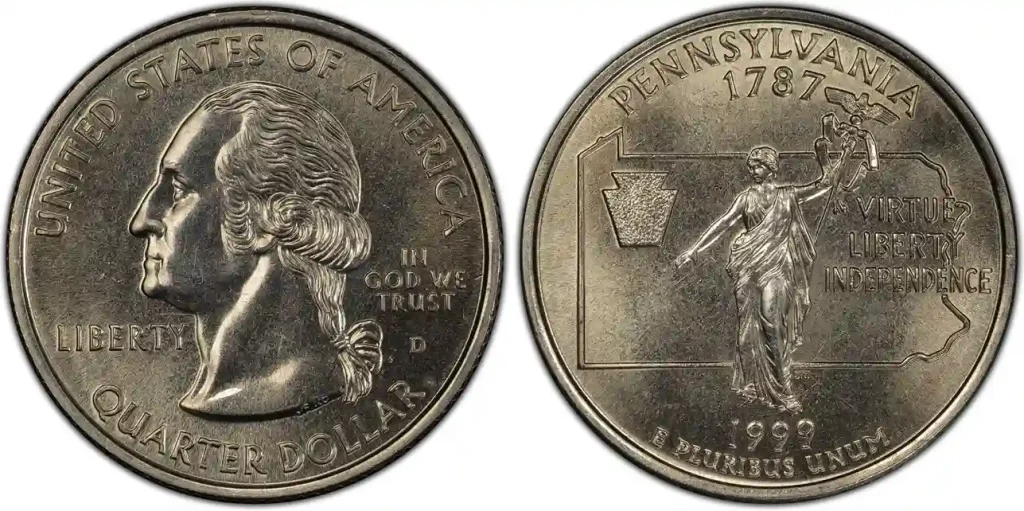
Pennsylvania quarters have a state map outline and the Commonwealth statue. This gold statue stands on top of the capital building dome. Commonwealth values appear on the coin center.
This design remains very popular among history lovers. Market price levels remain stable without big jumps.
New Jersey
New Jersey quarters show General George Washington crossing the icy Delaware River. The historic date under the boat reminds people of the war. Collectors love clean specimens with nice details around the Washington figure.
Nice examples without scratches command stable prices online. Many silver proof versions of this state have excellent eye appeal.
Georgia
Georgia quarters feature a large peach surrounded by oak branches. State outline boundaries form the background for these nature elements. This specific state release has many small die crack errors.
You can find many cheap specimens in local coin shops. High grade coins are hard to get because of poor production quality.
Connecticut
Connecticut quarters display the famous Charter Oak tree with many leaves. This large tree helped save the state independence from the English king. This release has the highest standard price in the 1999 series.
Perfect MS68 coins always bring great auction bids. Collectors pay high premiums for beautiful green-colored copper-nickel pieces.
Error Coins
Mint production mistakes create rare quarters with high cash value. Technical machine problems turn normal coins into rare collectables.
Die Crack Spitting Horse
Delaware mint errors from Denver often show broken die lines. The metal crack creates a raised line near the horse mouth. This visual line looks like the horse is spitting.
- MS65 value: $15 to $50
- MS67 value: $150
- Rarity level: Medium
- Mint location: Denver
Buyers look for strong prominent lines.
Experimental Planchets
United States Mint workers tested new gold-colored metal blanks before making Sacagawea dollars. They struck some 1999 quarters on these test blanks. Experimental coins have a distinct golden color without a copper edge.
- Average price: $3,000 to $8,000
- Highest record: $10,500
- Planchet type: Experimental
- Key feature: No copper line
These test coins weigh more than standard quarters. Actual market value for these rare finds is high.
Broadstruck Error
This error happens when the coin press strikes a blank outside the collar. The metal flows outward freely without the steel ring restriction. The quarter becomes wider and loses its round shape.
- Normal value: $40 to $120
- Shape: Off-round
- Edge detail: No reeds
- Grade impact: Moderate
Design elements near the edge become flat and distorted. Broadstruck coin value in excellent condition ranges from $40 to $120. Wider specimens usually get better bids.
Off Center
Incorrect blank placement during the strike creates off-center errors. A large part of the metal remains empty and flat. The final error value depends on the offset percentage.
- 10% offset price: $20 to $50
- 50% offset price: $150 to $450
- Blank area: Smooth
- Date requirement: Highly visible
Collectors pay the most for 50% off-center coins with a full date. Real market value ranges from $150 to $450. Off-center quarters with missing dates have lower prices.
Double Struck
A double strike happens when the machine hits the coin twice before ejecting it. The second strike is usually off-center relative to the first design. This mistake is very rare on state quarters.
- Minimum price: $300
- Maximum price: $800
- Design state: Overlapping
- Collectibility: High
You can see two overlapping images clearly. Double struck coin value is $300 to $800. Pristine specimens command the highest bids.
Value Drop Factors
Bad storage and wrong handling reduce coin prices quickly. Even rare coins can lose all their worth and become normal pocket change.
Acid Cleaning
Using chemical liquids to clean coins destroys the original luster. Acid solutions remove the natural surface patina. Grading experts easily see these cleaning marks under microscopes.
Cleaned coins receive a details grade and lose 80% of their market worth. For example, a rare Delaware MS68 coin dropped from $2,000 to $150 after home cleaning.
Mechanical Damage
Cleaning coins with metal brushes or rough towels leaves permanent scratches. Scratched coin surfaces cannot get high grade numbers. Even one scratch reduces the price significantly.
Smart buyers avoid damaged coins completely. Always handle quarters by the edges to prevent surface scratches.
Bad Storage
Storing quarters in soft plastic holders with PVC causes green damage. Plastic chemicals react with the copper metal inside the coin. This chemical reaction slowly eats the metal surface.
Removing this green damage without losing the mint luster is impossible. Safe storage requires acid-free paper flips or hard plastic capsules.
Practical Tips for Investors
Successful coin investing requires a smart approach. Buy certified coins to avoid fake items and hidden damage. Certified slabs from major grading companies guarantee the exact coin grade.
Weigh rare error quarters on accurate scales to verify their authenticity. Monitor completed auction sales regularly to know actual prices. This helps you buy quarters at fair market rates.